
Soy
Soy is a key agricultural commodity, due to its global production volume and widespread use. In our Private Brand and perishable products, soy can be used in two ways: directly, as an ingredient in food products (such as beverages, oils and other soy derivatives), and indirectly, as feed for the animals responsible for producing eggs, milk, cheese, meat and aquaculture fish.
Our strategy is aligned with Element 1 of the FPCoA soy roadmap and involves two levels of action:
increasing traceability of soy at the agricultural production level, thus reducing uncertainty about its origin;
ensuring sustainable sourcing whenever soy comes from countries with risk of deforestation, such as Argentina, Brazil and Paraguay.
Beyond these commitments, we have set additional goals – one of which is to ensure that soy in our Private Brand and perishable products is free from deforestation (legal or illegal) and from the conversion of High Conservation Value (HCV) ecosystems, while guaranteeing respect for human rights throughout the production chain. To this end, we have adopted 31 December 2020 as the cut-off date for deforestation and conversion (except in cases where sector-specific cut-off dates already exist – such as the Soy Moratorium in the Amazon, which sets 22 July 2008 as the reference date –, or other dates are established by law).
Since soy is often purchased through indirect suppliers, mapping these supply chains is a challenge for food retailers. In such cases, our direct suppliers do not purchase soy themselves; instead, they purchase animal-based products from supply chains where animals were fed with soy in earlier, and often distant, stages of their operations. In order to identify the origin of the ingredients used to feed these animals, it is necessary to have a collaborative approach.
To mitigate the risks of deforestation and ecosystem conversion associated with soy production, we track and monitor the flow of indirect soy through industry associations and initiatives such as the FPCoA.
Progress in 2025
Our soy consumption includes 100% of both direct soy (such as soy-based drinks, soy sauces, lecithin and soy oils) and indirect soy (all types of soy used in animal feed to produce goods such as eggs, milk, cheese, meat and fish from aquaculture) that are used in the Private Brand and perishable products we sell in the countries where we operate.
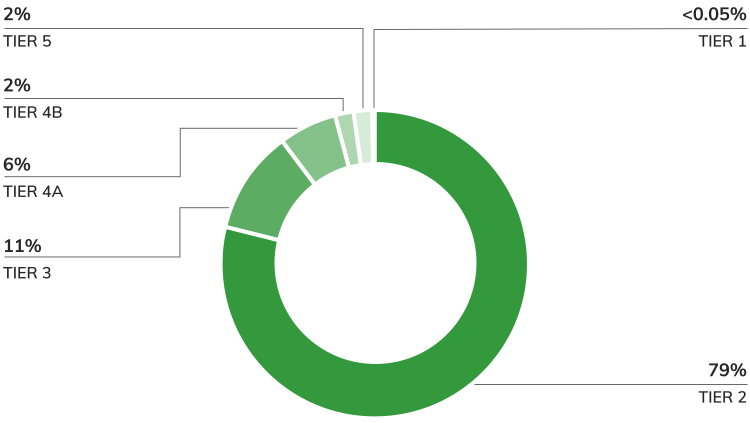
In 2025, our total soy consumption – considering all five tiers described above and covering our full range of Private Brand and perishable products – was 511,370 tonnes. Of this:
Only 2% corresponded to soy used as a direct ingredient (Tier 1 and Tier 5), namely in vegetable oils and beverages. There was a decrease of 2-p.p. in direct soy consumption, resulting from reformulations in the composition of vegetable oils containing this ingredient in Ara’s Private Brand products.
Around 98% corresponded to indirect soy (Tiers 2 to 4b). The majority of this volume (91%) is linked to specialised perishables in the meat and aquaculture fish categories (Tier 2) and non‑specialised perishables such as eggs and dairy (Tier 3). The remaining 7% is attributed to processed foods, like ready meals and sausages, that contain ingredients derived from animals fed with soy.
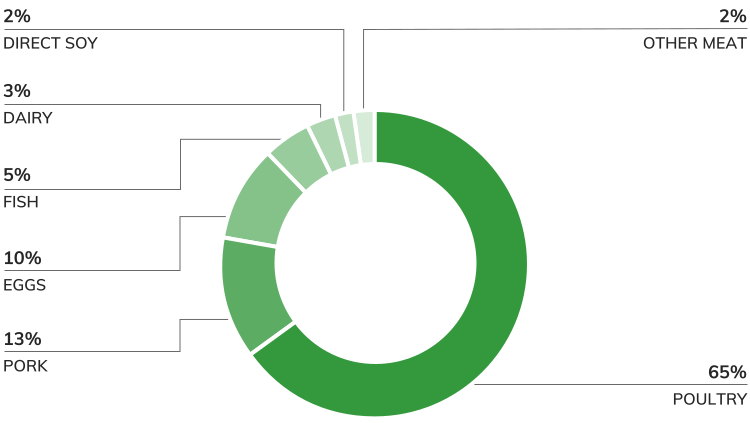
Around 65% of soy was associated with poultry feed (4 p.p. more than in 2024), 13% with pig feed (5 p.p. less than in 2024) and 10% with egg production (approximately the same share as in 2024).
Soy footprint by tier (2025)
Soy footprint by ingredient (2025)
Our soy strategy is based on two complementary lines of action. The first is to strengthen traceability mechanisms down to the level of agricultural production, which reduces uncertainty regarding the origin and increases value‑chain transparency. The second is to ensure that, when soy originates from countries with a higher risk of deforestation – such as Argentina, Brazil and Paraguay – we work closely with our suppliers to ensure sourcing is based on sustainable practices.
In 2025, we strengthened traceability for 97% of the soy used in our supply chains to at least the country of production, reducing the share of soy of unknown origin to 3% (2 p.p. less than in 2024). This progress reflects the commitment and joint efforts of our suppliers to increase the traceability of their own supply chains. We will continue to build close relationships with our suppliers in 2026, focusing particularly on poultry, pork and eggs, given their relevance in our supply chain.
Around 72% (8 p.p. more than in 2024) of the soy used in Private Brand and perishable products – mainly indirect soy – were sourced from countries at risk of deforestation which, according to the FPCoA, include Argentina, Brazil and Paraguay. Of these, 16% (1 p.p. less than in 2024) had sustainability certification, such as RTRS or ProTerra.
Mapping indirect soy continues to be a challenge for food retailers, particularly until the plot production level. Since soy is often incorporated into animal feed far upstream in the value chain, our direct suppliers do not buy soy, but animal‑origin products whose production chain includes soy at a distant and less visible stage. This complexity reinforces the need for collaborative approaches to identify the origin of feed ingredients and increase transparency in the sector.
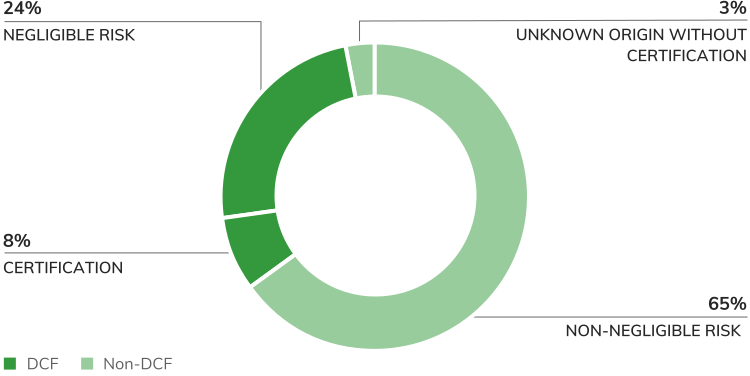
We estimate that, in 2025, 32% (12 p.p. less than in 2024) of our total soy consumption was not associated with deforestation or the conversion of High Conservation Value ecosystems. This value (equivalent to 164,185 tonnes) consists of 24% from negligible‑risk origins and 8% covered by physical certification schemes (up to the Mass Balance level). The results reflect the global pattern of the soy value chain, particularly soy used for animal feed: it is sourced mainly from South American countries and has limited availability of certified raw material.
Considering direct soy, 4,880 tonnes were considered DCF (82% of the total), since they originated from negligible‑risk regions. In the complex chain, 159,305 tonnes (32%) achieved DCF status, reflecting the greater complexity associated with animal‑origin products. This value results from the combination of 24% from negligible‑risk origins and 8% covered by physical certification schemes (up to the Mass Balance level).
Our soy consumption considered as “in progress towards DCF” represented 3% of the total, corresponding to 15,428 tonnes. This amount refers to indirect soy of unknown origin, where it was possible to trace either the origin of the raw material (dairy, chicken and pork) or the origin of the animal feed. One of the collective goals of the FPCoA is to collaborate with sectoral associations to address the traceability challenge in the value chain.
DCF Status - Soy (2025)
For soy originating from higher‑risk countries, the RTRS credits purchased by our suppliers represented more than 5% of consumption (20,253 tonnes). In 2026, in partnership with our Private Brand and perishable suppliers, we will seek to convert part of these credits into physical certification schemes. Our aim is to progressively increase the share of soy classified as free from deforestation and ecosystem conversion.
For more information, please refer to our Annual Progress Report available on the Round Table on Responsible Soy website.
Engagement with suppliers and traders
As a member of the FPCoA, and within the scope of Element 2 of the soy roadmap, our commitment includes engaging with suppliers of our Private Brand and perishable products by informing them of our goals and progress and encouraging them to adopt the same commitments within their own operations. In 2025, as in previous years, we shared our commitments, progress and policies regarding our contribution to a forest-positive future with all our suppliers.
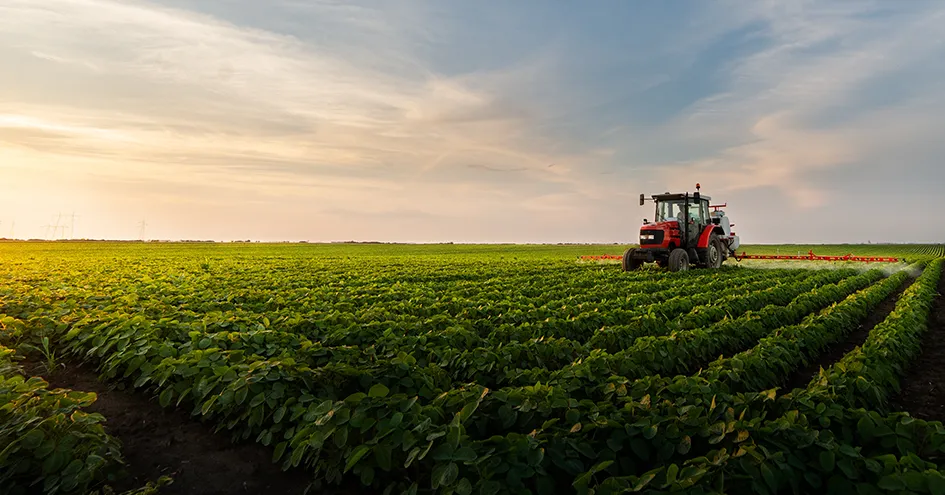
In 2025, we continued to identify the policies and measures implemented by our most relevant direct suppliers – representing over 80% of our soy consumption – regarding deforestation prevention and respect for human rights, both within their operations and upstream in their supply chains. We also assessed the existence of mechanisms to control deforestation and ecosystem conversion, such as adequate traceability, cut-off dates, and monitoring systems.
At the same time, we actively collaborate with our direct suppliers to improve awareness of the certification systems available on the market, especially on standards recognised by RTRS and ProTerra.
In 2025, we were able to identify the upstream traders of our direct suppliers responsible for more than 75% of our soy consumption originating from countries at risk of deforestation and conversion. The traders responsible for 15% of this consumption were assessed by CDP (7% were rated A- and 8% rated B) under the Forests programme.
Forest 500 was used as an additional benchmark to assess the maturity of deforestation-related governance and supply-chain management among our key traders. The assessment showed that approximately 15% of the supply chain footprint is linked to traders with comparatively advanced practices (scores above 60%), 11% to traders demonstrating intermediate levels of maturity (scores between 40% and 50%), and 17% to traders with more limited evidence of forest-risk governance (scores below 20%).
Cargill, De Heus and Louis Dreyfus are the most prominent traders in our supply chain. The coalition will continue to work with traders to foster partnerships that contribute to a forest-positive future.
In the coming years, we will continue to assess the contribution of our direct suppliers to a supply chain that promotes a forest-positive future. This assessment will cover their deforestation policies, the level of traceability of soy origin, the implementation of verification mechanisms and their knowledge of their own supply chains, including the traders with whom they have direct or indirect commercial relationships.